Tudor houses
Updated . Built from 3 cited pages.
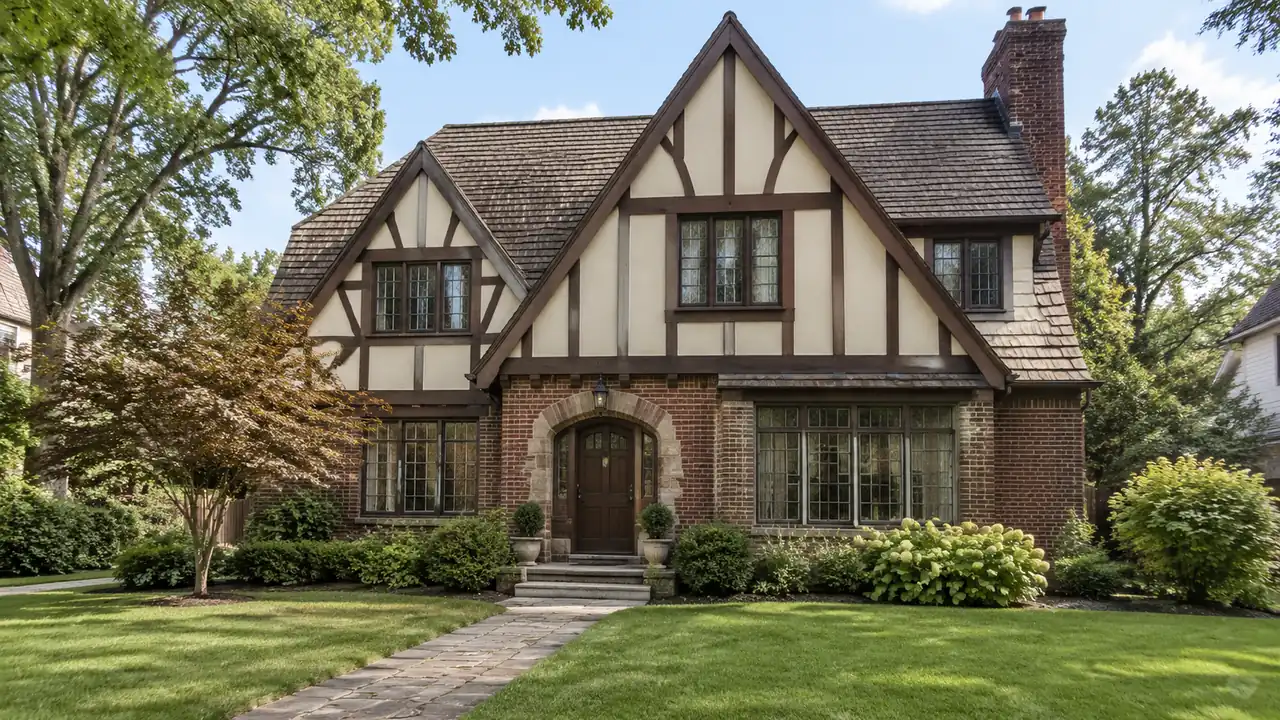
One preservation guide notes that you can recognize a Tudor house by its steeply pitched roof, often with front-facing or multiple gables, and half-timbered walls.1 Another source dates Tudor Revival’s emergence to the early 1900s and its popularity through 1940.2
What the sources say
- How to recognise it
- “Tudor buildings are easily identified by their steeply pitched roofs, often with a front facing gables or multiple gables, and half timbered wall surfaces.”1
- When it was built
- “Tudor Revival styles emerged in the early 1900s and remained popular through 1940.”2
- On exterior colours
- “The exteriors of Tudor homes are generally painted in earth tones such as brown, gray, greens and cream, that call to mind their original pastoral settings.”3
What it can look like
See your own house restyled
Try it on your own house.
Sources (3)
- Tudor Revival Style 1890 - 1920 | PHMC > Pennsylvania Architectural Field Guide, retrieved 2026-11-17
Tudor buildings are easily identified by their steeply pitched roofs, often with a front facing gables or multiple gables, and half timbered wall surfaces.
- QuarkRrevival.qxd, retrieved 2026-11-17
Tudor Revival styles emerged in the early 1900s and remained popular through 1940.
- 13 Tudor House Exterior Paint Color Ideas Worth Copying, retrieved 2026-11-17
The exteriors of Tudor homes are generally painted in earth tones such as brown, gray, greens and cream, that call to mind their original pastoral settings.