Ranch houses
Updated . Built from 3 cited pages.
One preservation guide notes that you can recognize a ranch house by its long, rambling form: one story, usually with overhanging eaves.1 Another source dates its nationwide suburban spread to the post-WWII housing boom, continuing into the 1970s.2
What the sources say
- How to recognise it
- “It’s one story, long and rambling, and usually has overhanging eaves of variation in fenestration and when possible, there is a use of natural materials.”1
- When it was built
- “In the post-WWII housing boom, the style spread across the country, becoming the ubiquitous suburban housing type into the 1970s.”2
- On exterior colours
- “Dark, saturated body colors paired with clean white trim instantly modernize a Ranch.”3
What it can look like
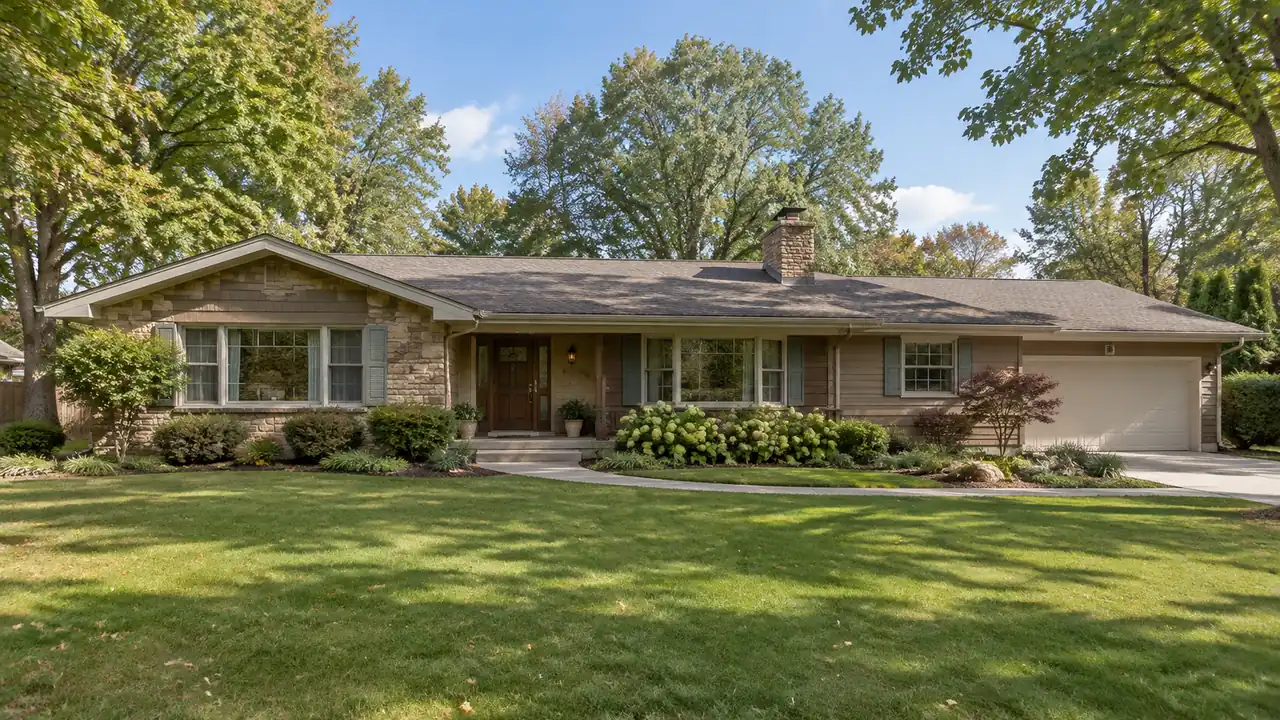
See your own house restyled
Try it on your own house.
Sources (3)
- Identifying the 1950s Ranch House Interior as a Cultural Resource (U.S. National Park Service), retrieved 2026-11-17
It’s one story, long and rambling, and usually has overhanging eaves of variation in fenestration and when possible, there is a use of natural materials.
- Evers Family Home (U.S. National Park Service), retrieved 2026-11-17
In the post-WWII housing boom, the style spread across the country, becoming the ubiquitous suburban housing type into the 1970s.
- Best Exterior Paint Colors for Ranch Homes (2026) | PaintVue, retrieved 2026-11-17
Dark, saturated body colors paired with clean white trim instantly modernize a Ranch.