Bungalow houses
Updated . Built from 3 cited pages.
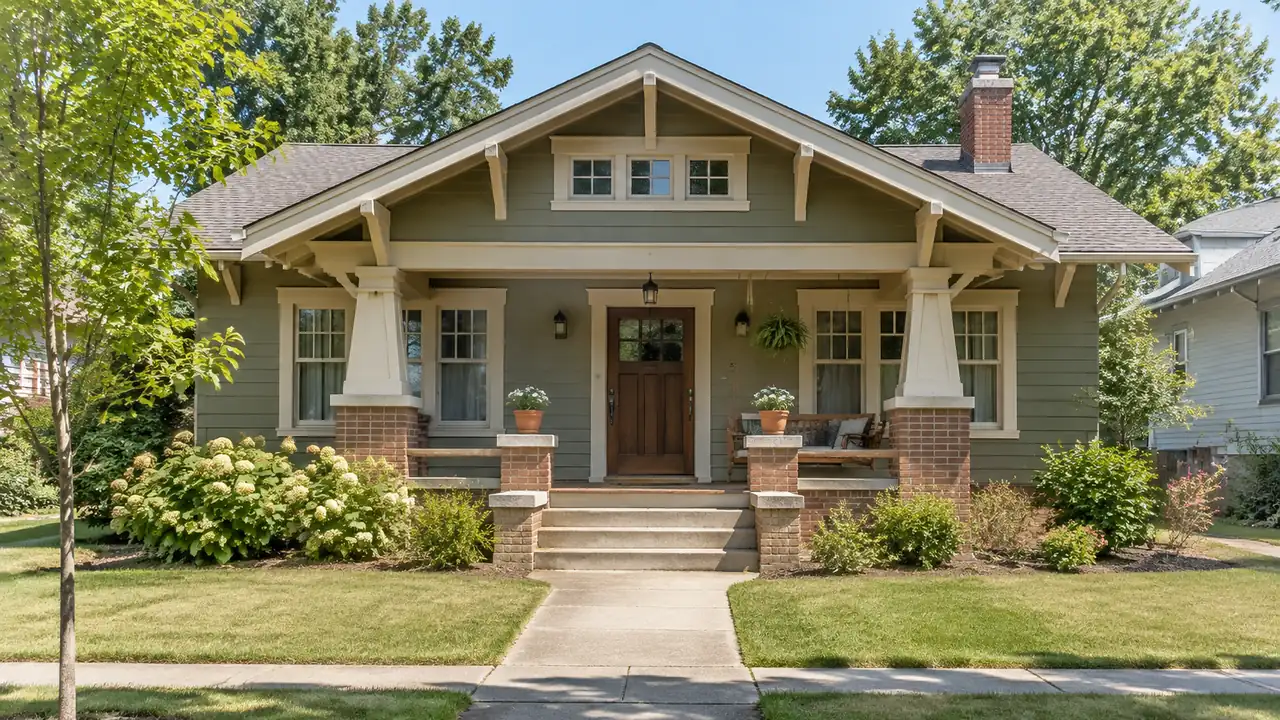
One preservation guide notes that you can recognize a Craftsman style bungalow by low pitched roofs with wide eaves, exposed rafter tails and purlins, and often knee braces.1 Another source dates the bungalow’s rise in America to the teens and 1920s.2
What the sources say
- How to recognise it
- “Design elements typical to a Craftsman style bungalow include low pitched roofs with wide eaves, exposed rafter tails and purlins and often knee braces.”1
- When it was built
- “In the teens and 1920s a new housing type, the Bungalow, took America by storm.”2
- On exterior colours
- “Common bungalow exterior colours include shades of whites and beiges, blues and greens, warm creams, and yellows.”3
What it can look like
See your own house restyled
Try it on your own house.
Sources (3)
- NFS Form 10-900, retrieved 2026-11-17
Design elements typical to a Craftsman style bungalow include low pitched roofs with wide eaves, exposed rafter tails and purlins and often knee braces.
- Bungalow | Washington State Department of Archaeology & Historic Preservation (DAHP), retrieved 2026-11-17
In the teens and 1920s a new housing type, the Bungalow, took America by storm.
- Best Colour Combination for Bungalows - Asian Paints, retrieved 2026-11-17
Common bungalow exterior colours include shades of whites and beiges, blues and greens, warm creams, and yellows.